
You may have seen (here and here) that my fellow blog writer, Charlie Wolcott, has concluded his time writing blog posts. As you perhaps have guessed from the title of this post, I am wrapping up writing blog posts as well, and this is my final post for Worldview Warriors.
My first weekly blog post (which I’m almost embarrassed to link to) was published on September 17, 2011, more than 14 years ago. You are currently reading my 744th blog post. I have published a post every week, with two exceptions – once, we had some theological concerns to work through, and the other time I was on a cruise and didn’t write ahead (as I have done since then). Sometime many years ago (perhaps even before I started writing posts), Jason DeZurik gave me a T-shirt at a Worldview Warriors event that was black with the words “Be Consistent” in white on the front. I still wear it occasionally, and I believe I have lived out that motto quite well in my blog writing!
But rather than focus on my accomplishments here, I believe it’s much more fitting to showcase what God has done in my life and how He has brought all of this about. It was truly God who brought me to this ministry. In 2004, God called me to go to seminary; in 2007, He made that happen. I had to move to Findlay, OH, for seminary (where I ended up staying, thanks to God’s plans), and the first job I had here was absolutely terrible. But God brought about a new job for me, as a design engineer at Ridge & Associates. The owner of the company at the time was a big supporter of the newly-formed Worldview Warriors ministry, so he gave Jason DeZurik office space in our building. Jason walked by my office to get to his, and that’s how God brought us together back in the summer of 2007, along with leading us both to the same church at the time.
After I finished my MDiv in 2010, Jason asked me to be on the radio program, Do Not Keep Silent, which was only about a year old at that time. I had wanted to be on the show since his very first broadcast, but I knew that if God wanted that to happen, it would – and it did. Starting on December 5, 2010, I was on the broadcast just about every month until the show ended in October 2023. God used Jason to stretch me and grow me, both theologically and in my ability to deal with the unexpected. It became a joke that during nearly every show, live on the air, Jason would say, “I didn’t prepare Katie for this, but…”
When Jason first asked me to write a few blog posts in September 2011, I did not know what God would do with that. I wrote stories as a kid, but as an engineer, writing wasn’t really my “thing.” But it felt like what God was directing me to, so I started writing. In late 2012, Jason asked me to proofread his book since I was good at grammar, and I was already proofreading doctoral dissertations for the seminary for a few years by then. In 2014, I took over managing the blog – coordinating posts and writers, making sure all posts were proofread, and then publishing them on this platform. At one point, we had 8 regular weekly writers: one for each day, Monday through Saturday, and two who alternated on Sundays!
God used that to launch me into a side gig of proofreading books, which led to formatting books, designing covers, and helping people publish their work. In January 2019, Worldview Warriors published its first three books – What the Bible Says About, Biblical Foundations, and Heroes of the Faith – all of which were based on blog post series. Since then, we’ve published a total of 13 books, 7 of which I authored. God grew my work in the publishing area so much that at the end of 2020, I left my full-time engineering job at Ridge & Associates and pursued my book editing/publishing business, among other ministry ventures, including starting my Doctor of Ministry degree in Biblical Hebrew teaching methods, which I completed in 2023.
Throughout this entire time, God was consistently growing me in my faith. The consistency of blog writing, the discipline of slowly walking through various Scripture books in my writing, the challenge of listening to what the Holy Spirit was directing me to write about, the adventure of theological discussions on live radio (many of which were also recorded and turned into a podcast), and the opportunity to grow together as a ministry team were all a huge part of my spiritual development as a person.
Through God’s direction years ago, Jason DeZurik took a chance on me – this nerdy engineer who was exploring God’s calling on her life – and helped me grow into the person I am today and the person that the Holy Spirit is still developing me into. We built a deep friendship through all those years and hours spent on the radio together, and we have walked through a lot of life’s ups and downs together. For all of that, I am truly thankful!
But this wouldn’t be a Worldview Warriors blog post without throwing some Scripture in here, so here are a few passages that I feel are especially fitting. Romans 8:37-39 says, “No, in all these things we are more than conquerors through him who loved us. For I am convinced that neither death nor life, neither angels nor demons, neither the present nor the future, nor any powers, neither height nor depth, nor anything else in all creation, will be able to separate us from the love of God that is in Christ Jesus our Lord.” This is the truth that being a part of Worldview Warriors has truly driven home for me. Writing blog posts for 14 years has sometimes been more academic than spiritual, but the amazing and all-powerful love of God is always there, urging me to follow His leading in my life and recognize what He has done, is doing, and will do.
I would be remiss if I didn’t also quote Qohelet as well: “Not only was the Teacher wise, but he also imparted knowledge to the people. He pondered and searched out and set in order many proverbs. The Teacher searched to find just the right words, and what he wrote was upright and true. The words of the wise are like goads, their collected sayings like firmly embedded nails —given by one shepherd” (Ecclesiastes 12:9-11). All of the words that I’ve written on this blog were not my own; they were given by one shepherd, God Almighty. While I’ve never done a word count on my writings, they’re generally 1000-1200 words each, so I’ve probably written in the ballpark of 800,000+ words for this blog. While my words are not on the level of Scripture by any means, I pray that each one of them was God-ordained and “useful for teaching, rebuking, correcting and training in righteousness, so that the servant of God may be thoroughly equipped for every good work” (2 Timothy 3:16-17).
We know that “There is a time for everything, and a season for every activity under the heavens” (Ecclesiastes 3:1), and my season of writing weekly blog posts has come to an end. I strive to continue following God’s leading in my life, wherever that takes me. Right now, that looks like being the “behind the scenes” person to make ministry work happen for Church Doctor Ministries, Church4Today, and the Momentum Network, producing videos and podcasts for The Joshua Center, teaching research courses at the master’s and doctoral levels at Winebrenner Theological Seminary, helping people publish books, doing website design, managing my rental properties, serving various organizations in my community, and whatever else God decides to do with me to fulfill His good purposes in this world. This life is all about God and bringing Him glory, and I pray that I have done that through this blog.
I leave you with a closing from the Apostle Paul, Romans 16:25-27: “Now to him who is able to establish you in accordance with my gospel, the message I proclaim about Jesus Christ, in keeping with the revelation of the mystery hidden for long ages past, but now revealed and made known through the prophetic writings by the command of the eternal God, so that all the Gentiles might come to the obedience that comes from faith — to the only wise God be glory forever through Jesus Christ! Amen.”
This forum is meant to foster discussion and allow for differing viewpoints to be explored with equal and respectful consideration. All comments are moderated and any foul language or threatening/abusive comments will not be approved. Users who engage in threatening or abusive comments which are physically harmful in nature will be reported to the authorities.


With both sadness and gladness, this is the last blog post I will be writing for Worldview Warriors. As I wrote last week, this has been an incredible journey, and it is a journey that is not over. My life has gotten very busy. I teach physics full-time, and I coach fencing part-time. Not only that, but I am also now teaching a Bible study group at my church, and that doesn’t include writing and other things. It simply is getting to be too much.
Since the summer, halfway through my series on Jesus, I started feeling no heart or energy for this blog. It is not that there was anything wrong with it, but I was starting to get to a point where it was more of a distraction than a joy or pleasure. When I wanted to get working on my Proverbs 3:5 book, the blog posts had deadlines and took priority. And I didn’t have much time during the week to write them, and so I would write en masse during my times off to get ahead. It has become more of a chore than a joy. And one thing I don’t want to do is give half-hearted, no-energy teachings through these blogs. Yes, I get some of the greatest sermons ever preached were when the pastor had no prep time or had no energy and was completely reliant on the Lord, and that has happened with my blogs at times, but I can’t live on that. And God doesn’t operate that way. So to honor the series I had chosen to do, I decided to finish it, which I did last month, and that left me these final posts to be a “closing” for me.
Three weeks ago, I wrote about Biblical manhood and why we must not follow the world’s 11th Commandment of “Thou shalt be nice” at the expense of the other ten. Then I wrote about whether you are going to live as a victim or as a victor. I could have written about the Gospel many times, or about our salvation, but I felt that I should conclude my blog posts with those two topics before I say my farewell to the blog. Worldview Warriors is firing up with a very similar vision but a totally new thrust and engine, and what better way to help launch it than with those two posts? All that said, while this is my final blog post, this is not the end of my ministry with Worldview Warriors.
I still have my Proverbs 3:5 book to finish. I have several other books in mind, and one of them is a Lord of the Rings-style epic that is going to be a multi-book series. A central theme behind it will be the effects of true and false teachings. So I am definitely going to continue my book writing. But I have other projects in mind too.
The problem I had with the blog was that it was basically weekly maintenance. I needed to keep producing content to be released a week at a time, and that is the main reason I need to stop with it. I don’t have the time to do it anymore. That said, I have other content I can give Worldview Warriors. So I am not leaving the ministry at all; I am merely changing my role. The problem with the blogs is that they come every week, but they come and are forgotten unless you know where to look for something. What I will be doing is providing more permanent resources.
A church brother made a comment a couple of months ago after Bible study that I should write an evangelism tract on the “Crown of Thorns” because that is a mini-topic I include in multiple presentations that always tends to blow people away. In a short sentence, when Adam sinned, God cursed the ground to produce thorns and thistles. Then, when Jesus died, He wore a crown of thorns and therefore literally wore the curse of sin to the cross. So now that I am done blogging with this one, I can focus on creating one-time material that can be easily referenced and used. Obviously, I can do more than one tract, but it got me thinking. That’s a whole category of things we can produce. I also plan to write articles for Worldview Warriors as well, but these would be longer and more sporadic. Jason DeZurik has also asked if I would be open to speaking and even going on speaking tours. While it is challenging with my teaching schedule, due to having two weeks off in October, December, and March, with June and July off, that is not unreasonable. So I am not going away. I am simply going in a new direction. What I will be producing through Worldview Warriors will be evangelical tracts, booklets, longer-than-blog articles, books, and hopefully getting back into speaking again.
Also, I am chewing on doing some more scientific research. In a year and a half, the 10th International Conference on Creationism will convene, and I have some ideas I am cooking for a research paper. I will need to have it done by the summer of next year if I want a full paper for the 2027 Conference, and if I do just an abstract (which is more likely what needs to be done), I have a bit more time. I am looking at studying the “Uranium to Lead” decay chain in particular because it’s one of the favorites to showcase millions of years, and I’ve seen enough pieces to know there is a severe reason to question it. But I have some ideas that might put these different pieces together in a way that hasn’t been done yet. So I am still chewing on that, but I can’t do that and do my Proverbs book while doing the blog and my Bible study. Something has to be put aside.
So this wraps up blogging for me with Worldview Warriors. I thank you who have read and followed me for the last 12 years. I can still be followed on my personal Facebook page, where I post a devotional from my daily Scripture readings, and I’ll still be sending stuff to Worldview Warriors. What is going to come out of this is better and richer products than what I had before, and as God leads, we’ll see what else He prompts me to do. Farewell, and keep watching Worldview Warriors for a lot more content and a lot more variety of stuff. The fire has been rekindled, things are taking a new shape, and the zeal is just getting going again. Stay tuned because God is not done with us yet.
This forum is meant to foster discussion and allow for differing viewpoints to be explored with equal and respectful consideration. All comments are moderated and any foul language or threatening/abusive comments will not be approved. Users who engage in threatening or abusive comments which are physically harmful in nature will be reported to the authorities.
“But the fruit of the Spirit is love, joy, peace, forbearance, kindness, goodness, faithfulness, gentleness and self-control. Against such things there is no law.”
- Galatians 5:22-23
We end the list of the fruit of the Spirit with a word that touches nearly every area of daily life: self-control. In many ways, self-control feels like the most practical and the most challenging of the list. It meets us in our habits, our reactions, our appetites, our words, our screens, our spending, our tempers, our time, and our choices when no one else is watching.
We live in a culture of excess – excess noise, options, consumption, distractions, and indulgence – and yet Scripture invites us into a different way of life. Scripture invites us not to a life of restriction for its own sake, but one of freedom through surrender. Self-control is not about suppressing life; it is about ordering life under the lordship of Christ.
Biblical self-control is the idea of mastery over oneself, restraint, disciplined living, and strength over desires and impulses. We are to say no when temptation calls, yes when obedience feels costly, wait when impatience increases, and enough when we’re tempted by excess. Self-control is not self-reliance; it is dependence on the Holy Spirit. It is the power of God working within us to align our desires with His will.
Scripture consistently ties self-control to wisdom, maturity, and godliness. Proverbs 25:28 says, “Like a city whose walls are broken through is a person who lacks self-control.” Titus 2:11-12 says, “For the grace of God has appeared that offers salvation to all people. It teaches us to say ‘no’ to ungodliness and worldly passions, and to live self-controlled, upright and godly lives in this present age.” Second Timothy 1:7 says, “God gave us a spirit not of fear but of power, love, and self-discipline.” Self-control protects us. It guards our hearts, strengthens our witness, and leads us toward freedom, not bondage. Without self-control, even good gifts can become destructive idols.
Jesus lived a life of perfect obedience and holy restraint, never once failing in His self-control. He resisted temptation in the wilderness. He chose obedience over comfort. He restrained His power instead of using it for selfish gain. He controlled His tongue before His accusers. He submitted to the Father’s will, even unto death. At any moment, Jesus could have called down angels to rescue Him, yet He chose the cross. That is self-control at its highest expression: choosing God’s will over personal desire, even when it costs everything.
However, self-control is challenging because it pushes against instant gratification. It goes against acting out our initial emotional reactions. It defies cultural pressure and our fleshly desires to “do what feels good.” It fights against entitlement and spiritual laziness. We often see self-control as denying our desires, but in reality, it’s all about redirecting our desires toward the things of God.
The practice of self-control should touch our lives in many ways. It should shape how we speak – resisting gossip, choosing gentleness over sarcasm, pausing before responding in anger, and speaking truth with love. It should shape our emotions, helping us respond with grace rather than react immediately. It does not deny emotions but submits them to Christ. Self-control should honor God with our bodies and our physical lives: what we consume, how we rest, and caring for our health. Self-control helps us take control of our screens, schedules, commitments, and distractions, guiding us to choose what matters most.
The world sees discipline as limiting, but in God’s eyes, discipline brings freedom and liberation. A life without self-control is chaotic and enslaved to impulses that come and go, while a life controlled by the Holy Spirit is steady, purposeful, and free. It frees us to live the life for which God designed us, not the life that our impulses and desires of the flesh demand.
Because self-control is a fruit of the Spirit, it grows as we walk closely with God. We need to focus on transforming and renewing our minds to focus on the desires of the Holy Spirit. Practice small acts of obedience, as self-control grows through daily decisions, not dramatic moments. Seek accountability in all of this, as God often uses others to strengthen our self-discipline. Recognize that we will fail at self-control, but failure is not the end. God’s grace restores and strengthens us, allowing us to always try one more time.
Ask yourself, where do you struggle most with self-control? What habits shape your daily life for good or for harm? How might greater self-control lead to deeper freedom? What small step of discipline is God inviting you to take this week?
As I close this series on the fruit of the Spirit, remember this truth: Fruit is not produced by striving; it is produced by abiding in the Holy Spirit. The fruit of the Spirit is not a checklist to complete but a life to cultivate. As we walk daily with Christ, surrender to the Spirit, and trust God’s transforming work, these qualities grow in us slowly, steadily, and beautifully: love, joy, peace, forbearance, kindness, goodness, faithfulness, gentleness, and self-control.
May your life bear much fruit, for your good, for the good of others, and for the glory of God.
This forum is meant to foster discussion and allow for differing viewpoints to be explored with equal and respectful consideration. All comments are moderated and any foul language or threatening/abusive comments will not be approved. Users who engage in threatening or abusive comments which are physically harmful in nature will be reported to the authorities.
These next two posts are going to be my last ones for Worldview Warriors. It has been a great 12-year journey, and so I want to use this final post to reflect on these 12 years I have spent with Worldview Warriors and then share what direction I am heading. I am not leaving Worldview Warriors, but my role with the ministry is going to be changing. So how did this start?
When I joined Facebook back in 2011, it wasn’t very long before I started getting into Creation debates. While believing the Bible’s direct account and knowing Evolution was a bunch of hooey, I was exposed to the science aspects by Kent Hovind and then Charles Jackson, from whom I credit much inspiration. And it was during a number of these early conversations that I met Jason DeZurik online, and he took a liking to both what I said and also my attitude of “not caring” what people thought about it. I just plain said the truth to the best of my knowledge. After taking some time to chat and get to know each other through our casual posts and messages, Jason asked me about joining Worldview Warriors. This was in the same time window in which Charles Jackson invited a friend of mine to the Creation Truth Foundation for their Cadre training. I started blogging for Worldview Warriors in January 2014, and I began the four sets of four days over two years of training at the Creation Truth Foundation that same month. This would officially begin a significant transition period in my life.
However, that transition was already starting. The previous summer in 2013, I could sense I was entering a new phase in my life, and I chose to get baptized as an adult (I had already been baptized as a child) to signify this transition. I don’t remember exactly when, but sometime around this, I went through a thorough examination of myself because I had serious doubts if I was actually saved. I was born into a church, I was raised in the church and on the mission field, I knew the Gospel, I knew the Bible, I had made my first profession of faith when I was seven, and yet, I had to examine myself because when it all was boiled down, it wasn’t my faith. It was my parents’ faith. It was my church’s faith. It was the mission’s faith. It wasn’t really mine. In this searching, I came to the conclusion that I was saved and now the faith was actually mine. Was I saved as a child? Possibly, but I cannot say with certainty. I can say with certainty that when I came out of that searching, I was saved then. Had I died before this time, I do not know if I would have gone to heaven or hell. But I do know now.
That sparked this 12-year journey with Worldview Warriors. The Cadre training was completed in November 2015, and I was commissioned with the rest of my group to teach about Biblical worldviews, emphasizing the Creation aspect, and I have not backed down. I have truly become a “warrior” for the faith. I began teaching a Bible study at my previous church, and now I am at another church. It’s a place where I can be challenged and grow, a place where they can keep me in check, even without direct discipline; just the preaching has done that. In my zeal, I was approaching a dangerous position; God pulled me out of where I was before I would unintentionally damage the church I was in, and He reeled me back in. I still have much room to grow, but I love where I am because we have the same vision. It’s far from perfect, but we have a singular goal: to be like Christ and to walk in the paths God intended for us.
Twelve years have passed. I have blogged every single week (except one, when I was out of town and wasn’t aware I could pre-write them) for these twelve years, and the growth I have experienced and the knowledge I have gained to be able to teach others has been beyond what I can describe. I know it has been a blessing for many of you who have followed me because you have said so. When we look at the stats for our blog viewership, I still hold the record for the most-viewed post. Besides the blogs, I began to write several books, and I am currently working on my 6th. I have been busy teaching at my church, teaching physics at my school, still fencing competitively, but now also coaching at my school. And all this activity has been awesome.
What have I written on? The topics are almost endless. In my blogs, I have generally had three major themes: basic Christianity, spiritual warfare, and worldview issues, namely on origins. I have done many lengthy series, including on the Armor of God, spiritual warfare tactics, what sin is, what prayer is, what the Gospel is, multiple creation topics, and my longest one concluded this past month on the life of Jesus at 52 posts. Just go to the blog and click the tag for my name, and you will find my nearly 630 posts all in reverse order. And I kept a OneNote page full of topics and ideas I could cover. If I wrote on just that alone and did not do anything new, I would have material for literally 4-5 years without too much stretching. But many of them were not to be, and that is perfectly fine.
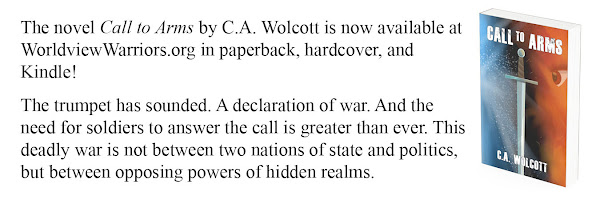
I have five books published with Worldview Warriors, one fiction and four nonfiction. My fiction novel, Call to Arms, is on its third publisher, and some of that is due to learning the system. My second book came out with the Worldview Warriors Publishing arm, and we “bookified” 60 of my blog posts at that time. I suspect a second book of this type is overdue. Then I wrote three others. One flowed out of a Bible study topic I had taught: Ten Reasons to Believe the Bible. Another flowed out of inspiration from a question Paul Washer asked: “When was the last time you heard a sermon on the attributes of God?” And I could not think of one, so I made one. That became The God of the Psalms. And my most recent, The Doctrines of Genesis, was to showcase how Genesis has the foundation of every central and core doctrine of the faith. I used the Apostles and Nicene Creeds as the framework and showcased where each tenet had some shadow or seed form or purpose laid out in Genesis. My sixth book doesn’t have a title yet, but the central theme is Proverbs 3:5 to “Trust in the Lord with all your heart and lean not on your own understanding.” As of this post, the first round of editing, which is not complete, has around 25 chapters and 300 pages, all around this one verse.
All that said, as I have mentioned, my time with the blog with Worldview Warriors needs to come to an end. Next week will be my last post, and in that, I will share what I will be doing and the next step of God’s journey for me, as well as a commission for my faithful readers.

This forum is meant to foster discussion and allow for differing viewpoints to be explored with equal and respectful consideration. All comments are moderated and any foul language or threatening/abusive comments will not be approved. Users who engage in threatening or abusive comments which are physically harmful in nature will be reported to the authorities.
“But the fruit of the Spirit is love, joy, peace, forbearance, kindness, goodness, faithfulness, gentleness and self-control. Against such things there is no law.”
- Galatians 5:22-23
If there’s any fruit of the Spirit that feels countercultural, or maybe even impossible, in the world we live in, it’s this one: gentleness.
We live in a society that often rewards the loudest voices, the sharpest comebacks, the strongest opinions, and the toughest personalities. “Stand your ground,” “Don’t let anyone walk over you,” “Get the last word” – these are the messages we hear every day. Social media especially encourages harshness; the quick jab, the snap judgment, the sarcastic reply, the assumption of the worst in others.
But in contrast to that, we as Christians are called to be gentle.
At first glance, gentleness might seem like the “softest” of the fruits—maybe even the least impressive. But Biblically, gentleness is not weakness. Gentleness is strength under control. It comes from a heart that is secure in the Lord, able to trust God’s power rather than asserting our own. It is one of the clearest ways we reflect the heart of Jesus Himself.
The Greek word translated as gentleness carries nuances of humility, quiet strength, controlled power, and a posture of peace. It was used to describe a powerful horse that has been trained, a king who rules with compassion, and a person who has every right to strike back but instead chooses mercy. Gentleness isn’t about lack of force but about choosing a better way because you belong to God and are led by His Spirit.
A gentle person speaks the truth, but kindly. A gentle person is strong, but refuses to crush others. A gentle person is wise, but refuses to boast. A gentle person has convictions, but refuses to condemn others when their convictions differ. A gentle person could retaliate, but refuses to be vengeful. Gentleness is a divine paradox because the stronger you are in Christ, the gentler you become.
Jesus, of course, is the perfect example of gentleness. In Matthew 11:29, He said, “Take my yoke upon you and learn from me, for I am gentle and humble in heart, and you will find rest for your souls.” This is the core of Christ’s character. He is powerful enough to calm storms, raise the dead, and cast out demons, yet tender enough to gather children in His arms, touch lepers with compassion, and restore the broken with mercy.
Think of His encounter with the woman caught in adultery (John 8:1-11). Jesus had every right to condemn her according to the law. He had perfect moral authority. But instead, He stooped down, silenced the accusers, and spoke words that healed: “Neither do I condemn you… Go now and leave your life of sin.” This is gentleness; it is truth with love, holiness with compassion, strength with tenderness. Jesus didn’t excuse sin; He transformed sinners through mercy.
Just as with the other fruit of the Spirit, gentleness is not optional. It is a command of Scripture, an evidence of the Spirit’s work, and essential for Christian witness. Our gentleness makes the gospel believable (see Philippians 4:5) because it is a countercultural testimony to the work that God has done in our lives.
Gentleness reflects spiritual maturity. Spiritual maturity isn’t measured by how much Scripture you know, how long you’ve been in church, or how many ministries you lead; it is measured by resemblance to Christ. If we claim to follow a gentle Savior, we must allow His character to be formed in us.
It’s important to note that gentleness is not being a pushover, avoiding difficult conversations, letting harmful behavior continue, pretending everything is fine, or sacrificing truth for peace. Gentleness does not mean you never say “no,” never confront sin, or never set boundaries. Jesus did all those things, and He was perfectly gentle. Gentleness is a posture we choose to guide our strength into appropriate channels.
Like the other fruit of the Spirit, gentleness cannot be produced by sheer willpower. It grows in us as the Holy Spirit forms Christ within us. But we can incorporate some practices in our lives to help cultivate this gift.
We can slow our reactions and practice restraint, pausing long enough to let the Holy Spirit guide how we respond to situations (see James 1:19). We should always look for the image of God in others, which helps us to treat others as sacred, even when they frustrate us, disagree with us, or behave poorly. We should practice gentle speech (see Colossians 4:6), offering correction with compassion, confronting others only with love and care, being quick to apologize, and speaking words that build up rather than tear down.
Gentleness grows when we practice it in our relationships, and it is a lifelong journey. Think about who may be requiring more gentleness from you in your life. Where should you respond with compassion rather than irritation? Who needs more of the Spirit’s gentleness to flow from your life into theirs?
This week, walk in step with the gentleness of the Holy Spirit, so that the world will see Christ in us through our gentleness.
This forum is meant to foster discussion and allow for differing viewpoints to be explored with equal and respectful consideration. All comments are moderated and any foul language or threatening/abusive comments will not be approved. Users who engage in threatening or abusive comments which are physically harmful in nature will be reported to the authorities.
One of the things you will hear from Worldview Warriors on a regular basis is the mindset of being a victim versus being a victor. I cannot tell you how many times I hear our president, Jason DeZurik, pressing this matter. Our culture wants nothing more than to make certain people perpetual victims and others perpetual damned.
A key component of Marxist ideology, particularly through the recent popular “Critical Race Theory,” is the marking of certain people based on a combination of race, economic position, AND religious/political affiliation as “oppressed” and “oppressors.” It is worth noting that the biggest factor here is more religious and political affiliation than actual race or economic status. In Critical Race Theory, the white evangelical is the oppressor because it was that demographic that ruled the slaves and who invaded from Europe. This completely ignores the Arab slave trades, the black slave trades, and the Chinese slave trades, let alone that whites were enslaved just as much. The reality is that no people group has ever escaped the issue of slavery; every people group has engaged in slavery, and every people group has been enslaved at some point in their history. But these teachings only emphasize white slave masters and black slaves, never acknowledging anything else, because that would end their influence. Because of the sins of the past, the white evangelical today, who has nothing to do with that, is still an oppressor because we are living on the oppression of years past. And the black person is a perpetual victim because they were held as slaves in early American history – again, ignoring actual historical context through the ages.
So, we have the blacks and the Hispanics who, because of their low status compared to the whites (according to these policies), need the help of the socialists with grants, scholarships, and hiring diversity exclusively on the basis of skin color and for “reparations,” because clearly, they cannot actually make it on their own. And the whites cannot do anything to make up for sins they never committed because even if they confessed to the ancient sins of the past, they are only doing it to protect their “white privilege,” so they are the abject evil that must be destroyed at all costs.
What is going on here? Among many other things, what I will focus on here is a group of people who, on their own self-declaration of being “experts,” are putting labels on people that define them as they want. And because they are “experts” (who made them an expert? They did.), they are to be trusted. So they label anyone they want, however they want, to fit their agenda. If they chose a certain group to be this, they label them as this and never let them escape from said label. It’s much like the caste system of India. Once you are born into it, there is no escape from it. The point I am trying to drive here is that this world system seeks to label you and never let you out of that label. And that labeling is to make you a perpetual victim and a perpetual slave to their ideals. They follow Georg Hegel, who said, “No man can surpass his own time, for the spirit of his time is also his own spirit.” And for anyone who lives in this world, that is absolutely true.
But as Christians, we are not ordinary people. We are not to be defined by this world; we are to be defined by God. And as Christians, we are more than conquerors. We are not to settle for defeat because some self-deciding people want to play God in our lives. We are to defeat them and overcome them. And I am not merely talking about politically. My very testimony was aptly described this way by a Facebook friend recently: “The ceiling the world put on me became my floor.”
When I was six years old, experts said I would never be able to run, barely walk, and to expect no improvement. I had to have physical therapists walk me through every action I knew at the time, including kicking a soccer ball. Yes, I had to have someone physically take my leg through the motion of kicking a ball because I could not figure out how to do it by watching. When I was 15, I learned two things without a physical therapist: hacky-sack and fencing. And 27 years later, while I don’t do the hacky sack thing anymore, I am still fencing and coaching. While never at an elite level, I have finally become respectable. When I was 18, I was told I would never drive, never go to college, and never live on my own – all things that I have done and am doing. When I was 12, I had no reading comprehension, and while I could recognize words, I had no idea what they were saying. I am a writer (obviously, by writing this post) and an author of five books, with number six soon coming, not to mention my 600+ blog posts. That’s just a sampling. Where every expert said I could not do it, I did it. And people who have gotten to know me have learned that once I set my mind to something, get out of my way because it is going to get done. How did I do all that? Not by my own strength and not by the wisdom of this world. But by and through the power of God.
The world is turning darker and darker. Politically, Trump is nearing the end of his ability to stave off the wicked agenda of the left. And the Church chose to rely on Trump to save them instead of repenting of their sins and turning to Christ. Because they put their hope in a false savior, they will get a false salvation. The most we ever got from Trump and could get from him is a short reprieve from the tightening of the noose. But will we lie down and moan and groan that we are losing the battle? Or are we going to rise up and take the battle where it truly is and hit the enemy in the teeth? Are we made of chocolate (as I wrote about last week), pathetic, weak, softies that melt at the slightest hint of oppression? Or are we the warriors God designed to fight this spiritual battle, to overcome the labels thrown at us, and to stop being victims with no escape and become victors? God saved us to be victors – to overcome sin and to overcome the world.
As Worldview Warriors is firing up again, we will seek to teach this next generation how to fight and how to overcome in Christ and to be someone this world can try to label but can never subdue or control. Don’t be a victim. Be a victor. Don’t let the world dictate your ceiling. While you may have the reality of right now, let that be your floor and let God take you where even wings and Red Bull could never take you.

This forum is meant to foster discussion and allow for differing viewpoints to be explored with equal and respectful consideration. All comments are moderated and any foul language or threatening/abusive comments will not be approved. Users who engage in threatening or abusive comments which are physically harmful in nature will be reported to the authorities.

So, we say with confidence,
“The Lord is my helper; I will not be afraid. What can mere mortals do to me?”
Remember your leaders, who spoke the word of God to you.
Consider the outcome of their way of life and imitate their faith.
Jesus Christ is the same yesterday and today and forever.
- Hebrews 13:6-8
Loving abundantly, even though this is my desire, is an impossibility if Jesus Christ is not a part of... NO! HE IS THE part of love.
To love those who have hurt you, are hurting you, or anyone who is making decisions that remove themselves and family members from a fellowship where God’s hand is working has always raised the hair on the back of my neck.
Reasons given go like this:
Well, it’s time my children need to go to this other fellowship and... they need, you know, Mom and Dad’s support, you know, we’re really torn as to whether to move or not.
The real reasons are that someone has hurt them in some way by word, by action, or by decisions that were made that were not in line with their wishes. The Church didn’t accommodate their own personal ideas or thoughts, based on self-centeredness.
Many of us give major lip service to Jesus Christ when we say things like, “This is my life and my soul,” and then shut Him out in decision-making that we do. When will we ever learn that the grass on the other side of the fence is greener only until we set foot on the other side and look back to discover that now where we came from is greener? You would think we might catch on at some point in our lives, but we just continue seeing the other side as greener, and we move to discover again how green it is where we came from.
Catching on would be to see that we need to have our inner man completely renovated by the Holy Spirit and allow Him to undue all things, not just a few things, all of our self-centeredness.
Your beauty should not come from outward adornment, such as elaborate hairstyles and the wearing of gold jewelry or fine clothes. Rather, it should be that of your inner self, the unfading beauty of a gentle and quiet spirit, which is of great worth in God’s sight.
- 1 Peter 3:3-4
Finally, all of you, be like-minded, be sympathetic, love one another, be compassionate and humble.
- 1 Peter 3:8
This forum is meant to foster discussion and allow for differing viewpoints to be explored with equal and respectful consideration. All comments are moderated and any foul language or threatening/abusive comments will not be approved. Users who engage in threatening or abusive comments which are physically harmful in nature will be reported to the authorities.

